
CUSTOM BATTERY ENGINEERING

Battery systems.Built around you.

From the first cell to the final test. Custom battery pack engineering and manufacturing, shaped around your application.

Engineered together. Built as one.Cell selection / BMS / Assembly / Testing

FROM CELL TO SYSTEM

Explore the six stages of a build

Cell selection by chemistry, form factor and the project load profile.

Chemistry & formatSupplier lot recordIncoming inspection

01BATTERY PROGRAMS

Different formats. The right fit.

Reference architectures support early technical discussion. Final construction, ratings and compliance are confirmed against project requirements.
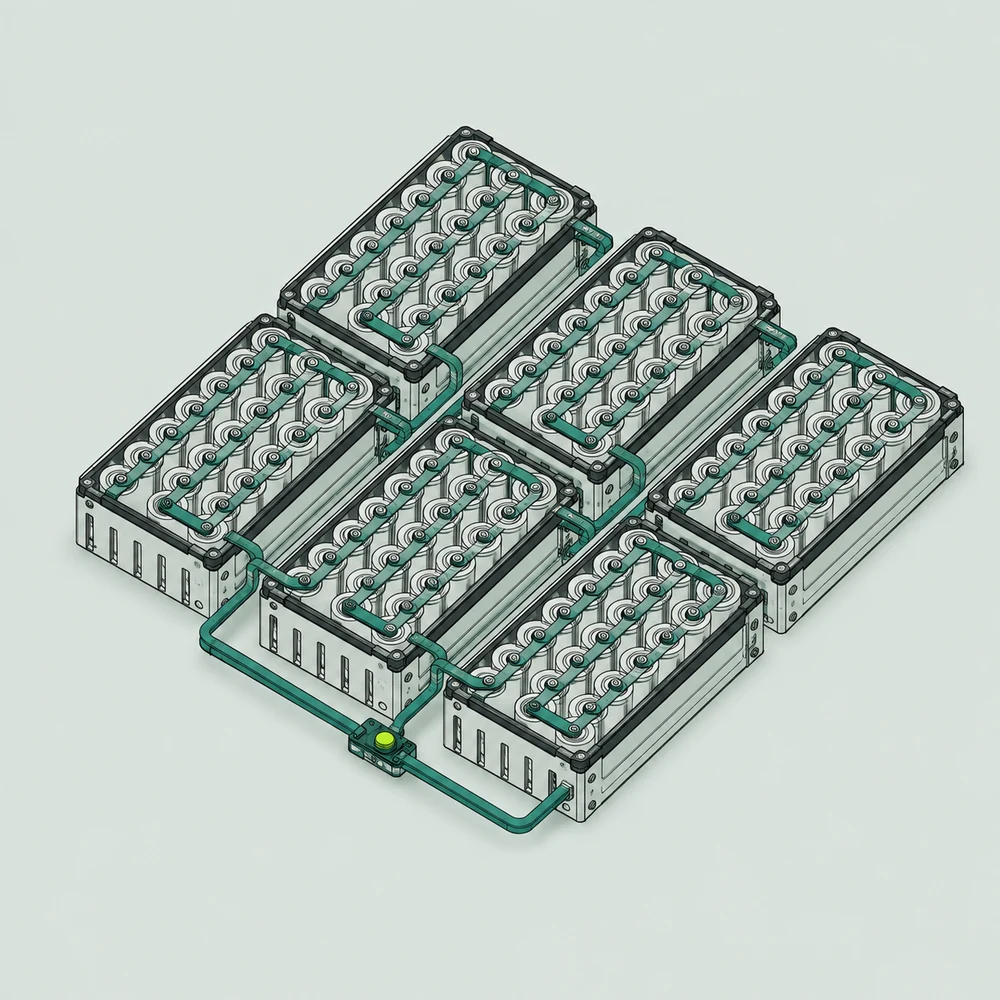
Cylindrical cells — illustrative module architecture
ARCHITECTURE STUDYCYL

BUILT FOR YOUR APPLICATION

Modular by nature.

Cell holders, busbars, sensing harnesses and enclosure architecture are developed around the project envelope and duty cycle.

  • 18650 / 21700 reference formats
  • Air or interface thermal paths
  • Serviceable module architecture
Discuss this architecture

02ENGINEERING

Every detail. One complete system.

Electrical, thermal and mechanical decisions are coordinated before tooling and pilot assembly.

Bring us your requirements
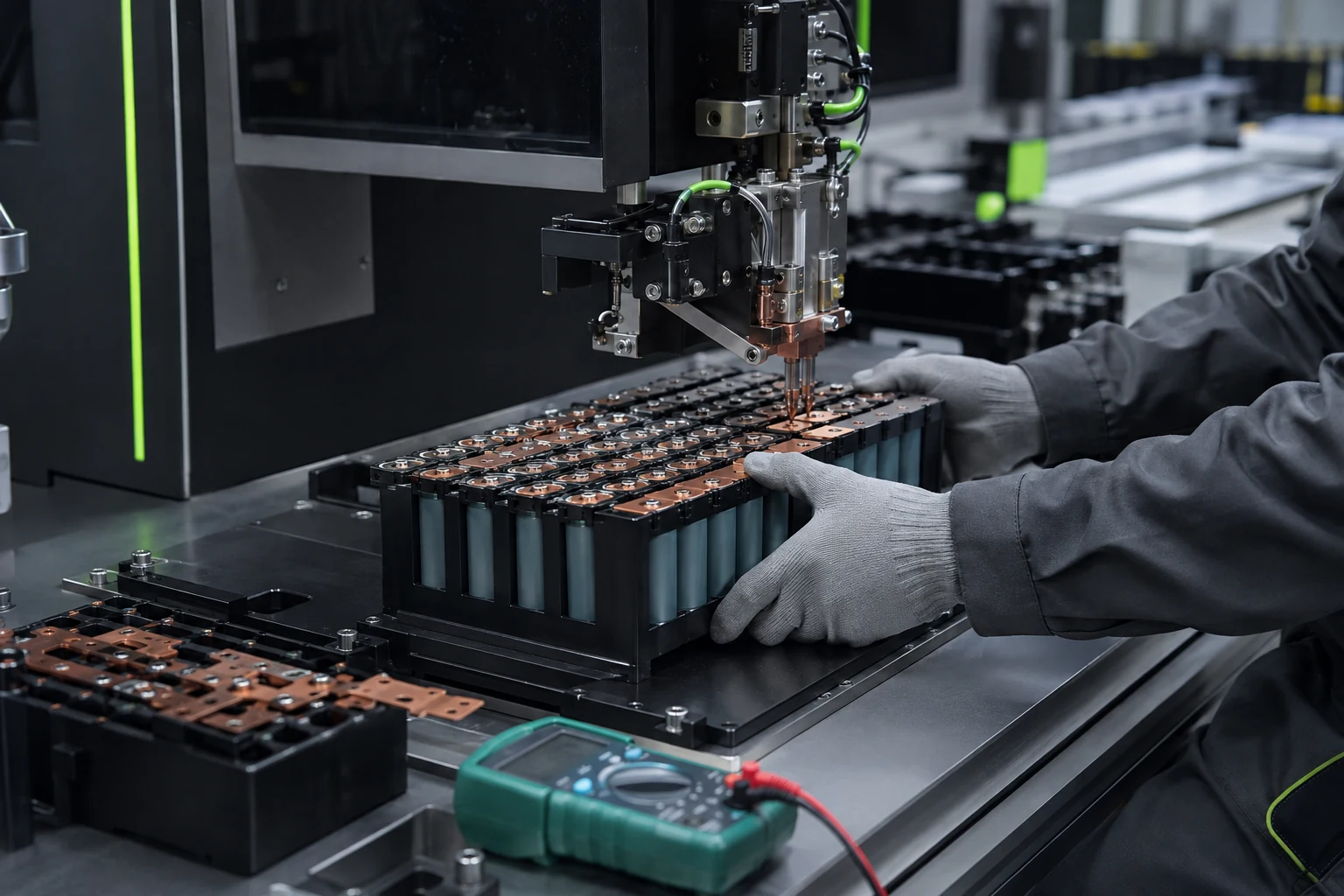
Battery cells aligned for controlled busbar welding on a production fixture.
Controlled cell interconnection / production fixture
01

BMS architecture

Protection logic, balancing, sensing and communication options.

02

Thermal path

Interfaces, spacing and heat-transfer routes considered with the enclosure.

03

Electrical integration

Busbars, connectors, fusing and harness routing coordinated as one system.

04

Mechanical DFM

Assembly access, fixtures, sealing and service strategy reviewed before build.

03QUALITY SYSTEM

Confidence, built into every stage.

The matrix below describes the intended project-control route. Specific tests and acceptance limits are confirmed for each program.
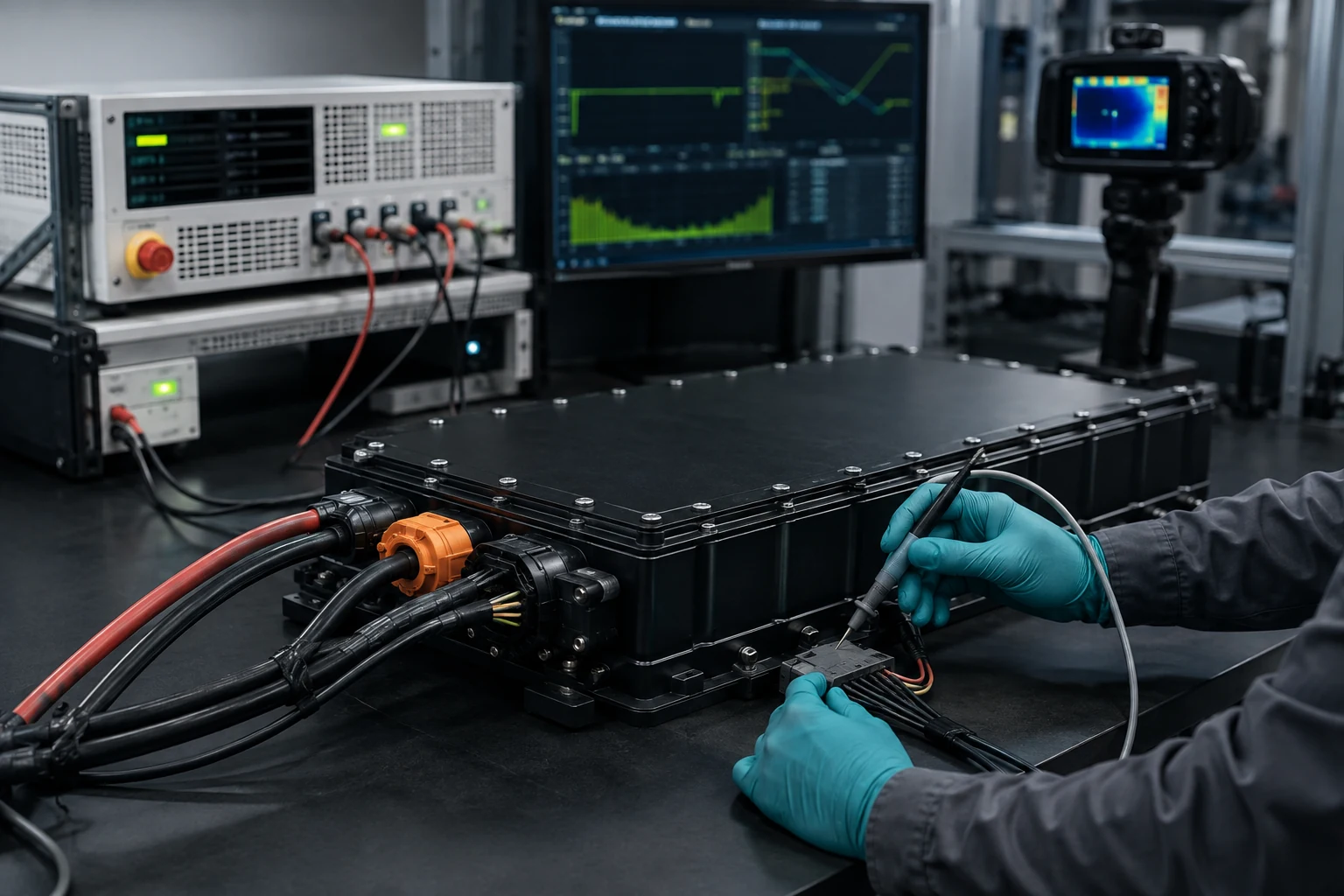
Finished lithium battery pack connected to electrical and thermal test equipment.
Electrical verification / end-of-line test bench
01

Incoming control

Cell lot identity · Voltage & impedance · Visual inspection

02

Process control

Weld parameters · Torque records · Polarity checks

03

Pack verification

Functional EOL · Charge-discharge · Protection response

04

Release record

Serial traceability · Test summary · Packing check

PROJECT EVIDENCE

The build, documented.

The exact document set is agreed for each program. These are the core records used for engineering review and release.

Cell input record

  • Supplier lot identity
  • Incoming inspection
  • Matching results

Interconnect record

  • Weld schedule
  • Pull-force sample
  • Polarity check

BMS release pack

  • Firmware identity
  • Protection settings
  • Communication map

Final test dossier

  • Functional EOL
  • Cycle summary
  • Serial traceability

04PROJECT DESK

Your next battery starts here.

Voltage, capacity, load profile, mechanical envelope and destination market are enough to begin an engineering review.

Product ratings, certifications, MOQ and lead time remain project-dependent until formally confirmed.

A FEW DETAILS TO GET STARTED